Tuesday, 22 June 2010

#38 Divorced and Deadly, by Josephine Cox (Harper Collins)

Where to start with Divorced and Deadly, the book I accepted as part of a blind challenge by my local library? How about the fact that I wish I hadn't walked into the library that day. Indeed, I would rather it had turned out to be a Mills and Boon.

The point of this year-long challenge isn't to badmouth books and authors - not least because I'm no Charlie Brooker, who would be much better able to give this novel the thorough kicking it deserves - but it's difficult to ignore something as unremittingly awful as Divorced and Deadly.

The blurb says the book is 'packed with hair-raising escapades and laugh-out loud moments'. I'm sorry, but it's really not. There is also the information that Cox started writing Divorced and Deadly on her website, as a series of 'hilarious' (her words, definitely not mine) real-life incidents which happened to real people, in real situations and so on. The publishers 'in their wisdom' (again, her words) then decided it should be lengthened into a book...

On a list of bad decisions, that one's up there with Cheryl Tweedy deciding Ashley Cole was suitable husband material. Indeed, like the latter's autobiography, this is an affront to literature, and it got to the stage where I seriously considered prying my eyes out rather than continuing to read such rubbish.

If a character named Dickie Manse brains-in-his-pants (and that's how he's referred to throughout) raises the slightest giggle, you may find something to briefly like within this book. If you find it childish, as I did, you'll want to move on as quickly as possible.

For a supposed comedic tale, the characters are so unlikeable it's painful. The 'escapades' mentioned earlier are incredibly infantile and any glimmer of a mildly amusing situation is magnified and extended to such a degree that renders it pointless and insulting to the reader. It's like making an hour-long documentary analysing a knob joke (which actually sounds like a whole lot more fun now I've written it down).

I completed it because I had to, rather than because I wanted to. And although I'll give any author some credit for actually managing to get a book published, after two 9/10 books in succession, this was a crashing, dismal and abject failure.

So, rating time:

#38 Divorced and Deadly, by Josephine Cox (Harper Collins) - 2/10

Next up: A Thousand Splendid Suns, by Khaled Hosseini (Bloomsbury)

  • Click here for the full list of books so far, and their rating
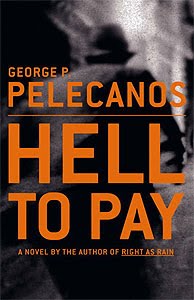
  • #37 Hell to Pay, by George Pelecanos (Orion)

    Hell to Pay is the third George Pelecanos novel of my challenge, and while I'd really enjoyed the previous two (Hard Revolution and Right as Rain), I couldn't help thinking that there was something missing. Perhaps it was the high level of my expectations; having known Pelecanos was one of the influential writers of HBO drama The Wire - the best thing on television, ever - I was hoping for great things, rather than novels that were simply very good.

    Well, I'm no longer so concerned, because Hell to Pay surpasses the highest of expectations and is everything I hoped for. A wonderful novel and a polemic against drug culture, the overwhelming feeling the reader is left with is one of anger. And it leaves a big impression.

    The book is dedicated to Dennis K Ashton Jnr, a seven-year-old who was killed accidentally in a shooting in Washington, the setting of Pelecanos' novels, in 1997. The inspiration is clear: Hell to Pay features a young boy who is murdered in a drug-related incident in which his relative was the chief target, and the futility of such shootings, the desperate impoverished life that provides the backdrop and the constant battle being fought between a desire for justice and revenge are all key themes.

    The lives and characters of the recurring characters, private investigators Derek Strange, Terry Quinn and others, are further fleshed out and reward readers of previous novels in the series while ensuring newcomers are treated to such a fine stand-alone book that they will be sure to look up the back catalogue.

    Like the best literature (and works of art in general), Hell to Pay not only expands the knowledge and cultural awareness of the reader (the audience), but also challenges them; poses difficult questions, and makes you wonder what the answers to those questions are. It also makes you question whether there are any answers, and if not, why not.

    It's the new best book I've read of the year so far.

    So, rating time:

    #37 Hell to Pay, by George Pelecanos (Orion) - 9/10

    Next up: Divorced and Deadly, by Josephine Cox (Harper Collins)

  • Click here for the full list of books so far, and their rating
  • Sunday, 20 June 2010

    #36 The Ministry of Fear, by Graham Greene (Vintage)

    If, like me, you like a bit of cake, the start and opening plot device of The Ministry of Fear is irresistible.

    I'll recite the blurb on the reverse: "For Arthur Rowe, the charity fete was a trip back to childhood, to innocence, a welcome chance to escape the terror of the Blitz, to forget 20 years of his past and a murder... Then he guesses the weight of a cake, and from that moment on he's a hunted man, the target of shadowy killers, on the run and struggling to find the truth." It's definitely one to hook baking aficionados.

    Better known for novels such as The End of the Affair, The Third Man, Our Man in Havana and The Quiet American, The Ministry of Fear was the first of Greene's work I had read (although I've seen a few film adaptations), and I enjoyed it greatly.

    Reading up on Greene, it seems he separated his work into what he called 'entertainments', which were typically crime suspenses, and 'novels', which were what he considered more significant examples of his craft as an author. This book falls firmly into the former category, but that's no bad thing in my eyes.

    Set in a London where you can hear the bombs falling around you, Greene sets off at a roaring pace and only pauses for breath when he needs to introduce a contemplative note. The plot twists and turns more than Ronaldo in full flight and chapters frequently end with a cliffhanger which implores the reader to turn the page and continue.

    Consequently, I raced through the novel, and from the mysterious Rowe, about whom new details are cleverly introduced, to the spy ring war plot which blossoms from a case of mistaken identity, there is barely a word out of place. The best book I've read so far this year.

    So, rating time:

    #36 The Ministry of Fear, by Graham Greene (Vintage) - 9/10

    Next up: Hell to Pay, by George Pelecanos (Orion)

  • Click here for the full list of books so far, and their rating

  • Just as an aside, it seems that Greene greatly enjoyed parody, even of himself. Apparently, in 1949, when the New Statesman held a contest for parodies of Greene's writing style, he submitted an entry himself - and won second prize.

    If you have to read, go outside

    I said earlier this year I would write about libraries, and I will, but for now the subject is the New York Public Library, an institution I had a tour around a few days ago.

    I mentioned recently how embarking on a challenge such as this had opened my eyes in other areas of my life and I'm not sure I would have gone on such a tour before the start of this year. But then the Wench and I were in the neighbourhood, saw the tour and I thought 'that might be interesting'. And it was.

    Apart from the magnificent building, the 88 miles of bookshelves, the 18 million books, one of the world's largest public resources and so on, I particularly liked the annual stipend (grant) the library makes available for budding authors to use offices within the library to work on their books.

    Just outside is Bryant Park, a grassy area with chairs and tables, where something called the Reading Room is located during the summer months. This haven of literature allows passers-by to borrow books or newspapers while they have lunch or just want to escape from their busy lives.

    Its location in central Midtown, on Sixth Avenue and 42nd Street, is one of the busiest areas of New York, just a couple of blocks from Times Square in one direction and Grand Central Station in the other. All around, the hustle and bustle continues, but office workers exit the neighbouring skyscraper office blocks to come across to Bryant Park and pick up some reading material for a brief while.

    The second time we passed the park, an author was giving a talk about her new book, and people were gathering around in their droves to hear what Kelly Cutrone, a fashion publicist and reality TV star, had to say about her memoir If You Have to Cry, Go Outside: And Other Things Your Mother Never Told You.

    As I walked by she was denying she was a lesbian, and it sounded like a lot of drivel to be honest, but as one of a host of planned literary events, non-exclusive and easily accessible to everyone, it's a great idea in my book.

    #35 All the Pretty Horses, by Cormac McCarthy (Pan Books)

    If it's bleak wilderness you're after, and a lament for life in the old west and roaming free under the stars, then look no further than Cormac McCarthy, who infuses his novels with more introspection than even Clint Eastwood could handle.

    All The Pretty Horses is known as one of his finest novels, one of the Great Modern American Novels to give it its full title, but I enjoyed No Country for Old Men more.

    There are some similar themes, the loss of what used to be an honourable way of life and a distrust of more modern ways, not mention events spiralling out of control, but, unlike main character John Grady Cole and the innate connection he has with horses, I struggled to connect with the other two main characters.

    To precis the plot, teenagers Cole and his friend arrive in Mexico determined to live the noble life of cowboys, hook up with a strange boy with a magnificent horse who gets them into trouble, and eventually prison, whereby the aunt of Cole's ill-fated love, the daughter of a rich rancher, frees them in exchange for the girl agreeing never to see Cole again. I told you it was ill-fated.

    The novel is rich with quiet contemplation, with men doing what what they've got to, 'the right thing' no matter the consequences, but strikes a bum note with the third character, the disruptive Jimmy Blevins. Cole is so circumspect and cautious, with good reason (except when falling for the girl), it's never quite clear why his judgement fails so spectacularly regarding Blevins, even when his friend warns him. With the girl, he recognises trouble will follow but makes his decision because of his feelings: with Blevins, there is no such conflict or potential reward, which just makes his choices all the more baffling.

    McCarthy brings to life a world whose days are numbered, and writes wonderfully about the horses, of which those who aren't pretty are still valued. But as a book, this is a scrub rather than a stallion.

    So, rating time:

    #35 All the Pretty Horses, by Cormac McCarthy (Pan Books) - 7/10

    Next up: The Ministry of Fear, by Graham Greene (Vintage)

  • Click here for the full list of books so far, and their rating
  • Friday, 18 June 2010

    High points

    One of the first books I read this year was set in New York, called Netherland, and while the book itself didn't set my world on fire, I was intrigued by its description of a 'park' called the High Line.

    When the Old Boy, who is currently playing mine host to the Wench and I on holiday, then mentioned it as one of his favourite parts of the Big Apple completely unprompted, I instantly remembered it and my curiosity was piqued.

    So, we paid a visit. And it's wonderful.

    An old, disused elevated freight line built in the 1930s and last active in the early 1980s, the High Line is the best of people making the most of what the past has provided but no longer needs. Walking along the elegantly designed route, in between the shrubs and flowers which mingle with the old railway track, and admiring some unusual views of Manhattan, it's great to see something which had fallen into disrepair transformed into such an attraction.

    The last thing I want is for this blog to turn into a travelogue (travelblog?), but I can't help reflecting on the fact that books I am reading and the knowledge I am accruing as part of this challenge are impacting positively elsewhere in my life.

    Wednesday, 16 June 2010

    #34 The Adventures of Tom Sawyer, by Mark Twain (Penguin Books)

    The fact that I'm currently reading another novel by Cormac McCarthy, hot on the heels of books by Bret Easton Ellis and Mark Twain, might indicate the destination for my current holiday - I've got a bit of an American theme going on.

    Twain's The Adventures of Tom Sawyer is often overlooked in favour of its sequel, the celebrated classic The Adventures of Huckleberry Finn, and that's exactly why I've returned to the former. I read Huckleberry Finn many years ago, but omitted its forerunner, the tale of Tom Sawyer.

    Tom Sawyer is often referred to as more of a children's book than Huckleberry Finn, and the 'adventures', a series of mischievous scrapes and escapades involving the protagonist and his chums, which invariably end in trouble - and Sawyer receiving some form of discipline - certainly appealed to this reader's boyish side.

    I can't help feeling that the above is damning Tom Sawyer with faint praise, however, because it's a far weightier book than some give Twain credit for. For all the pranks and episodes, including the famous whitewashed fence story, you're never far away from a feeling of lost childhood innocence, and the awareness that inequities in your youth will be repeated tenfold as an adult.

    Twain even refers to this in his preface: "Although my book is intended mainly for the entertainment of boys and girls, I hope it will not be shunned by men and women on that account."

    With murder, slavery, starvation and the dangers of alcohol never too far away, there is a much more serious side to the book, and even taking into account the fact that Twain was writing in 1876, I find it difficult to believe that Stephenie Meyer or JK Rowling would use as many long 'adult' words in their own books primarily targeted at younger readers, but which have garnered a large adult readership.

    The Adventures of Tom Sawyer is one of the most enjoyable books I've read so far this year, and was much needed after a run of novels in the past month or so which, while perfectly fine, have never really scaled the heights.

    So, rating time:

    #34 The Adventures of Tom Sawyer, by Mark Twain (Penguin Books) - 8/10

    Next up: All The Pretty Horses, by Cormac McCarthy (Pan Books)

  • Click here for the full list of books so far, and their rating
  • Miss is no boon

    I said earlier this year that I would write about libraries at some stage, and I will, but first a brief tale from the other day.

    I visited the library to take back a few books and get out a few more, in advance of a holiday when I intend to do enough reading to get me back on track in this challenge.

    It was early on Saturday, just after the library had opened, and as I handed over my latest books, the librarian drew my attention to a new 'blind book' initiative to encourage people to read new and different authors they might not normally contemplate.

    Give my challenge this year, this seemed right up my street, so it took little persuasion for me to embrace the idea and I was soon walking out with a little bag containing an unidentified book which I had agreed to read, no matter the author or genre, and then write a brief review when I had finished. Exactly what I'm doing with 100 books this year, then.

    As I left, in a bit of a hurry due to another appointment, the librarian joked: "Don't worry, it won't be a Mills & Boon." And when I got home, I discovered it wasn't. But it was virtually the next worst thing, what looks like some chick-lit nonsense called Divorced and Deadly, by Josephine Cox.

    But stop, I'm prejudging it, which misses the point of the entire exercise. As always, I'll give it a go.

    #33 The Informers, by Bret Easton Ellis (Random House)

    I'll start with a recommendation: if you haven't read American Pyscho, by Bret Easton Ellis, don't come back until you have done so.

    My More Literary Work Colleague, mentioned last month when I was plumbing the depths of depression (in terms of books at least), rates Easton Ellis as her favourite contemporary novelist, and on the basis of American Pyscho - a tour de force of such detailed violence and clinical prose, unlike any other book I've ever read - it's hard to argue.

    In addition to the author, American Pyscho shares with The Informers the distinction that both books have become feature films, but although the similarities don't end there, the comparison in quality does.

    I haven't seen The Informers, the film, but the novel is so vague and lacking in idendity, I have no idea how it was possible. Books are frequently described as 'unfilmable', but I think I would struggle to find one that fits such a description more perfectly.

    I should explain. While The Informers is a collection of short stories, they are interconnected. Each chapter has a different first person narrator - it can take five pages or more to work out exactly who each new narrator is, who may appear as a secondary character in other chapter. Each chapter is told from a first person's point of view and charts their vapid life in and around California - a litany of sex, adultery, drugs and dinner engagements.

    The chapters are connected to some degree, but because everything is so vague, deliberately so, it's never quite clear who is who (surnames are used sparingingly, for example). This all combines to produce a book that washes over the reader the way the characters themselves exist - for they cannot really be said to be 'living'.

    And while you can appreciate the clever way Easton Ellis has produced this effect of meaninglessness, it doesn't really result in a book you can enjoy reading. And that's even before you get to the vampire chapter which suddenly appears near the end...

    So, rating time:

    #33 The Informers, by Bret Easton Ellis (Random House) - 6/10

    Next up: The Adventures of Tom Sawyer, by Mark Twain (Penguin Books)

  • Click here for the full list of books so far, and their rating
  • Monday, 14 June 2010

    Joan of arc-h rival

    I'm jealous, and I'm not afraid of admitting it.

    This 100-book challenge may have started out as a bit of fun - and remains so, in many ways - but I have to admit the Friend of the Wench is beating me on all fronts.

    Not only is he ahead of me in terms of the number of books read, he recently received the gratification of an author he had read - the author of the very first book he tackled this year, in fact - contacting him via his blog to express her thanks.

    What's more, Joan Lennon, for it is she, wrote what a great idea such a challenge was, and went on to reveal her current literary plans and wish him all the best with completing his task.

    I'm therefore greener with envy than the Incredible Hulk. The Incredible Sulk even.

    Whither Paul Auster, Cormac McCarthy, Nick Hornby, Charlie Brooker, even wrestler Mick Foley getting in touch on these very pages? Jealous doesn't even begin to scratch the surface of what I feel, and you can rest assured that I intend to read the complete works of Ms Lennon sooner rather than later...

    But there's more. I have learned the Friend of the Wench, not content with whupping my ass on every front, has also been entering competitions in a bid to add to his burgeoning library - and he's only gone and won.

    Exactly what, I'm not sure, but the detail doesn't really matter. It's more the drip, drip, drip of constant success that is akin to water torture.

    Tuesday, 8 June 2010

    #32 Life of Pi, by Yann Martel (Harvest Books)

    I’ve finished! No, not the challenge, but the book I have been endeavouring to read for almost a decade: Yann Martel’s Life of Pi.

    For those who’ve not been following the challenge from the start, Life of Pi has been, in literary terms, the one that got away for me. I must have started the 2001 Man Booker Prize for Fiction winner four or five times over the years, only to give up halfway through for a reason I can never remember after the event.

    Perhaps I needed the mental strength and drive that trying to complete this challenge provides. Because my first thought upon finally turning the last page was ‘what was all the fuss about?’ And when I say ‘fuss’, I mean in my head. I wasn’t blown away by what I’d read, but equally, it was perfectly fine and enjoyable.

    Those who haven’t read Life of Pi are missing out on a fantastical tale of a boy, Pi, who is forced to live on a lifeboat with an adult Bengal tiger for 10 months after a ship transporting a number of animals sinks. This sounds enchanting – if hacking turtles and other animals apart in grisly detail can ever be enchanting - and indeed it is.

    In many ways, it’s similar to James Cameron’s Titanic film, if readers will forgive a small diversion. Throughout that lavish epic, you’re waiting for the sinking of the ship because you know it will be spectacular, and then once it’s happened, it’s time to tie up a few loose ends and roll the credits. In Life of Pi, the real story only begins once the ship has sunk, but in both artistic projects the preamble to the sinking seems to last forever.

    Of course, Titanic was rubbish, albeit big-budget and glossy rubbish, whereas Life of Pi retains a quirky charm once you get past the setting of the scene and the early religious pondering.

    I find reading about religion difficult. Too often, assigning a character a religion is a quick way to broaden out their personality and beliefs in narrow dimensions with little effort. To Martel’s credit, Pi is intrigued by three different religions – Hindu, Christian and Muslim – which prompts a funny early encounter when leaders of those faiths meet his confused parents at the same time, but this is an all-too-brief relief from the philosophising.

    There is much to enjoy in Life of Pi: some great insights into zoological life and nature, a battle for survival of mind and body and a tiger whose character is given the same depth and thought by the author as any human. Giving the tiger a ‘normal’ name is a masterstroke, by the way.

    So, in conclusion, I can’t argue that Life of Pi was worth the wait, because it would have to be the greatest book of all time to have satisfied me after such a long time trying to complete it - but it was worth the effort, for which I am grateful.

    So, rating time:

    #32 Life of Pi, by Yann Martel (Harvest Books) - 6/10

    Next up: The Informers, by Bret Easton Ellis (Random House)

  • Click here for the full list of books so far, and their rating
  • #31 King of the Ants, by Charlie Higson (Abacus)

    Under siege by ants at work, as I currently am, this seemed an appropriate book to tackle at this stage of my challenge, but unlike ants themselves, the novel proved to be less than fascinating.

    It’s billed as a darkly comic story of an amoral man who operates beyond the normal sensibilities of society. There is clearly a link here with ants, who have devised a completely interdependent society based on every member making a valuable contribution to their colony, but it’s not entirely clear what point author Charlie Higson is trying to make.

    In summary, the main character takes on a job which he knows isn’t entirely legal, and things progress to the point where he commits murder and finds himself on the run from the people who employed them. There’s plenty of sex and violence – and some of the violence is particularly nasty and hard to read – but I was never gripped by the story, and, like the anti-hero (as you come to regard him) himself, you begin to treat what’s happening with ambivalence.

    In that respect, the book is effective, but it doesn’t make it an interesting story, and I would rather spend the time watching ants – even when they’re suddenly appearing out of my computer and in my tea.

    So, rating time:

    #31 King of the Ants, by Charlie Higson (Abacus) - 5/10

    Next up: Life of Pi, by Yann Martel (Harvest Books)

  • Click here for the full list of books so far, and their rating
  • Thursday, 3 June 2010

    #30 Penguins Stopped Play, by Harry Thompson (John Murray Publishers)

    It’s difficult to review Penguins Stopped Play: Eleven Village Cricketers Take on the World. On the one hand, it’s a warmly funny, knockabout tale of a (very) amateur cricket team and their adventures, which include escapades on every continent.

    But after numerous giggles, and more than a couple of guffaws, the postscript by author Harry Thompson, who devised a range of TV comedy shows such as Have I Got News for You and Never Mind the Buzzcocks, reveals that he has been diagnosed with inoperable lung cancer. And then an afterword, written by Thompson’s wife Lisa, tells the reader that he died not long after completing the book.

    The story begins in Antartica, however, with Thompson, who has embarked on a trip at the request of a national newspaper, playing cricket (using an oar as a makeshift bat) on an ice shelf only to have play interrupted by a waddle (I looked it up!) of penguins, not to mention whales and a leopard seal.

    The title episode is typical of the rest of the book, with Thompson’s devil-may-care Captain’s Scott Invitation XI embarking on a series of matches against opponents often much better than they are, to the extent that players start to eschew the idea of gaining victory.

    As someone who played quite a bit of village cricket, the comic stories ring very true, and it’s to Thompson’s credit that he manages to make them interesting to a wider audience – a funny story to someone who knows all the characters being discussed can quickly become boring to an outsider.

    It helps that Thompson’s career path means there are occasional cameos from celebrities such as comedians Griff Rhys Jones and Hugh Dennis, plus a number of professional cricketers. But the book largely rests on the anecdotes and their telling, and these certainly pass muster.

    The end, chiefly his death aged just 45, does cause a problem, though. Whether intended or not, it transforms a largely whimsical book about the nature of sport and the travails of those who choose to embrace it into what could be interpreted as a ode, nay elegy, to sporting endeavour in the face of adversity.

    Indeed, the day after being told he has cancer, and the day before he is due to start his treatment, Thompson opts to play cricket, and he later requires surgery to remove a section of rib after dislodging a chest drain during some ‘little light fielding’.

    The tragedy of death apart, does it matter if you know the author died after finishing the book? It shouldn’t, but, as death often does, the knowledge does alter how you perceive everything which went before.

    So, rating time:

    #30 Penguins Stopped Play, by Harry Thompson (John Murray Publishers) - 6/10

    Next up: Tokyo Year Zero, by David Peace (Faber and Faber Limited)

  • Click here for the full list of books so far, and their rating
  • #29 How to Paint a Dead Man, by Sarah Hall (Faber and Faber Limited)

    Considering there are three deaths, a supposed rape, adultery and plenty of art in Sarah Hall’s How to Paint a Dead Man, it’s a shame that the book is merely absorbing rather than gripping.

    The blurb on the reverse of the novel, which was longlisted for the 2009 Man Booker Prize for Fiction for those people who care about such things, describes the book as a ‘fierce and brilliant study of art and its place in our lives’. That it is, but unfortunately the work never quite breaks out from that niche to fully engage and interest the reader.

    At this point, I should declare an interest: I’ve never really ‘got’ art, in terms of paintings at least, which is this book’s primary focus. I studied elements of it at university, I don’t mind visiting the occasional gallery and I like to think I can appreciate fine works, but I always feel like I’m missing something in a way that never occurs to me when I watch a film, read a book, interpret a dance etc.

    Perhaps this wasn’t the book for me then, but despite my baggage listed above, I did enjoy it. A neat device sees events snapping half a century described in sequence by the four main characters, and this introduces a serial element as you wait to get back to each individual tale. What’s more, as the novel progresses, you come to see how the lives of the older characters influence and affect those that follow.

    How to Paint a Dead Man is a novel which prefers to linger on the languid brush stroke of life itself rather than focus on the detail of an image or a life, and in that regard, it’s certainly an intelligent piece of work. However, I’m a detail kind of guy.

    So, rating time:

    #29 How to Paint a Dead Man, by Sarah Hall (Faber and Faber Limited) - 7/10

    Next up: Penguins Stopped Play, by Harry Thompson (John Murray Publishers)

  • Click here for the full list of books so far, and their rating
  • Monday, 31 May 2010

    #28 Juliet, Naked, by Nick Hornby (Penguin Group)

    Five months into this enterprise, I have yet to give out a 10/10 mark (there hasn’t even been a 9/10), and, in truth, this doesn’t bother me. A book has to be really good to qualify for that rating, and for all the fine books I have read so far, none have seemed quite worthy of such an assessment of excellence.

    However, I don’t want to give the impression that such a mark is an outright impossibility, and I was reminded of this when I embarked on Juliet, Naked, by Nick Hornby, whose first book, Fever Pitch, would probably have received a 10/10 rating had I read it as part of this challenge. It’s a magnificent piece of work.

    Juliet, Naked is very enjoyable, without reaching the quality of Fever Pitch. As always, Hornby writes with humour about relationships – this time between a man obsessed with a reclusive American musician and his partner – and there are numerous laugh-out-loud moments and some wonderful observations.

    But while the plot held my attention, and the career of musician Tucker Crowe and the ramifications of fame and fan obsession had a real ring of authenticity, I never really committed myself to the characters or their motivations.

    In conclusion, then, not Hornby’s finest. But then he set a very high standard in the first place.

    So, rating time:

    #28 Juliet, Naked, by Nick Hornby (Penguin Group) - 7/10

    Next up: How to Paint a Dead Man, by Sarah Hall (Faber and Faber Limited)

  • Click here for the full list of books so far, and their rating
  • Sunday, 23 May 2010

    #27 The Best After-Dinner Sports Tales, compiled by Will Chignell (CollinsWillow)

    In the event (see previous blog), I opted for The Best After-Dinner Sports Tales, compiled by Will Chignell, the reasoning being that I could do with a bit of cheering up rather than sinking further into the fount of despair.

    Unfortunately, The Best After-Dinner Sports Tales wasn't really the book to provide assistance in this area, with the numerous collected tales decidedly lacking in much cheer. There was the odd chuckle, admittedly, not to mention occasional insight into life as a sportsman and the incidents which take place behind closed doors, but actual guffaws were few and far between.

    In some ways, it was a perfect choice. The short excerpts from famous sports celebrities such as Phil Tufnell, Rodney Marsh and Ray Reardon were quick to read and easy to dip in and out of, which was helpful as I tried to erase a particularly annoying spyware programme which had somehow downloaded onto my computer. Indeed, given its unchallenging nature, it was no surprise I finished the book before I managed to delete the spyware.

    Times may be changing, but when I picture after-dinner speeches, I have an image of a very male-orientated world, a smoky room (despite the ban - it's my mental image, remember) and a boozy atmosphere. It’s hardly a surprise, therefore, that the majority of the contributing speakers are male, and there is an impression you are never far from an Englishman, Scotsman and Irishman joke.

    All that said, I can't be too sniffy about a book which raised thousands of pounds for charity. But it scores much higher in the worthiness rating than in my quality assessment.

    So, rating time:

    #27 The Best After-Dinner Sports Tales, compiled by Will Chignell (CollinsWillow) - 5/10

    Next up: Juliet, Naked, by Nick Hornby (Penguin Group)

  • Click here for the full list of books so far, and their rating
  • Thursday, 20 May 2010

    Depression brought to book

    It’s just over two days after the trauma of this season’s greatest disappointment, and in the aftermath, I found myself considering which novelists would best suit my mood.

    While I’m probably not at the point of considering the point of living, existentialist giant Albert Camus I know and have read before. Of course, Camus knows what he’s talking about – he was a goalkeeper, so must have been involved in one or two penalty shoot-outs in his time.

    I’ve not yet delved into any poetry, so I wasn’t keen on starting with Sylvia Plath, who tragically committed suicide, so I sought the assistance of a work colleague, who is far more literary than me.

    Try Philip Larkin, was the suggestion, ‘he’s a miserable sod’, or what about the ‘downbeat’ novels of Jean Paul Sartre or Philip Roth? Failing that, Robert Burton’s The Anatomy of Melancholy (1621) was the final offering. I wonder if they’ve got that at the library…

    Of course, I’m not seriously depressed, just a bit down, and depression should be no laughing matter. Indeed, friend and author Charlie Connelly makes that very point in fine fashion on his website (incidentally, fans of Charlie’s work may be interested to know I am actually in his fantastic Stamping Grounds: Liechtenstein’s Quest for the World Cup).

    Can I find any consolation in the crushing disappointment? Maybe it’s that I’ll have a bit more time to complete this challenge.

    Sunday, 16 May 2010

    #26 Screen Burn, by Charlie Brooker (Faber and Faber Limited)

    This is my third Charlie Brooker book of this year – guess what the Wench got me for Christmas? – and it’s been interesting reading them out of sequence.

    Screen Burn is actually his first published compilation, dating back to 2000 and the days when he was solely penning articles on television for the Guardian, before his role was expanded to a further weekly column with a wider remit.

    These articles, then, are all focused on the silver screen, and if I had one minor criticism (one that has probably only occurred to me after already reading The Hell of it All and Dawn of the Dumb), it’s that I could have done with a bit more variety.

    That’s not to say that Screen Burn isn’t as brilliantly funny as you’d expect, because it is. It’s also interesting to see how his writing style is more or less fully formed from the outset. That’s not to say that Brooker hasn’t developed at all over the past decade, but more that he has produced sustained excellence over a long period.

    Part of the fun of Screen Burn lies in his topical descriptions of what are now historical television events, such as the start of behemoths such as Big Brother, 24, Pop Idol and Trisha to the likes of the best-forgotten LA Pool Party, Touch the Truck and much more.

    The arrival of Simon Cowell as a TV celebrity prompts a particularly memorable and prescient rant: “…leaving the role of chief abuser to A&R man Simon Cowell, who’s instantly made a name for himself by acting like an unpardonable bastard, unafraid to star a contestant in the eye and overstate their uselessness with the sub-zero precision of a misanthropic character from a Neil LaBute movie. As a result, he looks less like an expert and more like a man clawing at fame with even more sad desperation than the hopefuls anxiously awaiting his judgment.”

    While Brooker’s lengthy diatribes are what he does best (that’s only about a third of his analysis of Cowell), he also knows how produce a concisely worded quip (My favourite line: on 24 character Kim Bauer: “Jack’s daughter Kim (hobbies: peril and cleavage)").

    Indeed, it wouldn’t surprise me if Sky+ had been invented solely due to the number of laugh-out-load moments produced by Brooker’s columns and books. In my house, I have jurisdiction over the remote control (damn right), and many’s the time I’ve paused whatever has been on to read the Wench the latest section to have tickled my fancy. I imagine it’s quite annoying.

    So, rating time:

    #26 Screen Burn, by Charlie Brooker (Faber and Faber Limited) - 7/10

    Coincidentally, my counterpart (nay rival) in this 100-books-in-a-year challenge, the Friend of the Wench, has just read Dawn of the Dumb on my recommendation. Read his review here.

    Next up: Juliet, Naked, by Nick Hornby (Penguin Group)

  • Click here for the full list of books so far, and their rating
  • Sunday, 9 May 2010

    #25 In the Kitchen, by Monica Ali (Transworld Publishing)

    Loved the set-up, loved the characters, loved the plot - didn’t like at all how the book progressed and ended.

    Despite its critical acclaim, I wasn’t a fan of Monica Ali’s Brick Lane, the novel that catapulted her to national fame in the literary world, but it was enough to pique my curiosity when looking for the book that would take me to my quarter century this year.

    In the Kitchen, much like Hearts and Minds, is a story of the seedier side of immigration and London life, focusing on a chef on the verge of opening his own restaurant who discovers a body…

    A measure of how much I was enjoying things is that I demolished the first half of the novel in double quick time, reveling in getting to know the traits of the numerous nationalities and their roles in the hotel kitchen and how they interacted with one another.

    Add in some unspecified goings on in a bedroom within the hotel and some well observed vignettes regarding the chef’s upbringing and history, and it was all combining to produce the best novel I’ve read so far this year - until the chef (and Ali) loses the plot.

    Without spoiling the book by revealing what happens, things start to go wrong very quickly, and having invested so much time in believable characters, it’s a shame when they start to act in increasingly bizarre ways, and my interest quickly waned.

    So, rating time:

    #25 In the Kitchen, by Monica Ali (Transworld Publishing) - 6/10

    Next up: Screen Burn, by Charlie Brooker (Faber and Faber Limited)

  • Click here for the full list of books so far, and their rating
  • Saturday, 8 May 2010

    One fine day

    It seems I'm still being cursed by the New York Trilogy. Not only did the collection of short stories severely hamper my efforts to complete this challenge, it's now cost me cold, hard cash as well.

    Confused? So was I when I returned some books to the library the other day, only to be told I still had one outstanding. Which one? I think you know the answer...

    Some other random thoughts.

    I've been thinking a lot about Robert Harris over the past few days. Not only has the film adaptation of Ghost recently been released to widespread critical acclaim, but I was reminded of Fatherland when I watched the film Good. Except Good was, well, really good.

    Just to keep you abreast of events, the next review will be of Monica Ali's In the Kitchen, I'm currently reading yet another Charlie Brooker compilation (he's just been slagging off Simon Cowell), and on the reading list for future weeks are the following:

  • How to Paint a Dead Man, by Sarah Hall

  • Juliet, Naked, by Nick Hornby

  • Penguins Stopped Play, by Harry Thompson

  • The Best After-dinner Sports Tales, compiled by Will Chignell

  • Tokyo Year Zero, by David Peace